
Michalinos Zembylas
Open University of Cyprus

Michalinos Zembylas is Professor of Educational Theory and Curriculum Studies at the Open University of Cyprus and Honorary Professor at Nelson Mandela University in South Africa. He currently holds the Commonwealth of Learning (COL) Chair in Open and Distance Learning for the period 2023–2026. His research focuses on the role of emotion and affect in education, particularly as they intersect with questions of social justice, decolonization, and political responsibility. Drawing on a wide range of theoretical traditions—including affect theory, postcolonial and decolonial studies, and critical pedagogy—his work explores how emotional and affective dynamics shape educational practices, policies, and experiences in deeply political ways. He is the author or editor of numerous books and scholarly articles. His most recent books include Responsibility, Privileged Irresponsibility and Response-ability in Contemporary Times: Higher Education, Coloniality and Ecological Damage (co-authored with Vivienne Bozalek) and Working with Theories of Refusal and Decolonization in Higher Education (co-edited with Petra Mikulan). Zembylas has received numerous distinctions, including the Distinguished Researcher Award in Social Sciences and Humanities from the Cyprus Research Promotion Foundation and fellowships from the University of British Columbia and the Stellenbosch Institute for Advanced Study. Since 2021, he has been ranked among the top 2% of the most-cited scholars worldwide, according to Stanford University’s annual index of academic influence.
Aleksandar Baucal
University of Belgrade

Photo: Nebojša Babić
Aleksandar Baucal is Professor of Developmental and Educational Psychology at the Department of Psychology, Faculty of Philosophy, University of Belgrade, and Visiting Professor at the University of Tartu. He is an elected member of the International Academy of Education (IAE) and a leading scholar in the fields of learning and development, educational assessment, and equity in education.
His research is grounded in a socio-cultural approach to learning and development across the life course, with a particular focus on how educational systems shape opportunities, belonging, and exclusion. A central concern of his work is the role of education in reproducing or reducing social inequalities, especially for children and young people from vulnerable and marginalized groups. Across his academic and policy-oriented work, he has consistently emphasized the moral, social, and political dimensions of educational practice.
In parallel with his academic career, Professor Baucal has played a significant role in education reform and policy development at national and international levels. From 2001 to 2004, he was actively involved in the reform of education in Serbia as a member of the Council for Educational Reform, the National Forum for Education for All (UNESCO), and the Central Commission for the Development of a New School Curriculum Based on Learning Outcomes. In recognition of his contribution to educational reform, he received the City of Belgrade Award for Contribution to the Development of Education in 2004.
Between 2002 and 2004, he founded and directed the Center for Evaluation, now the Institute for the Evaluation of the Quality of Education and Upbringing, which plays a key role in national assessment and quality assurance processes. From 2014 to 2017, he served as a member of the National Education Council of the Republic of Serbia.
Throughout his career, Professor Baucal has worked at the intersection of research, policy, and advocacy, contributing to numerous projects aimed at improving educational quality, relevance, and equity. His work is devoted to integrating knowledge produced through empirical research with educational practice and policymaking, with the aim of creating more just and inclusive educational systems.
Helen Haste
University of Bath
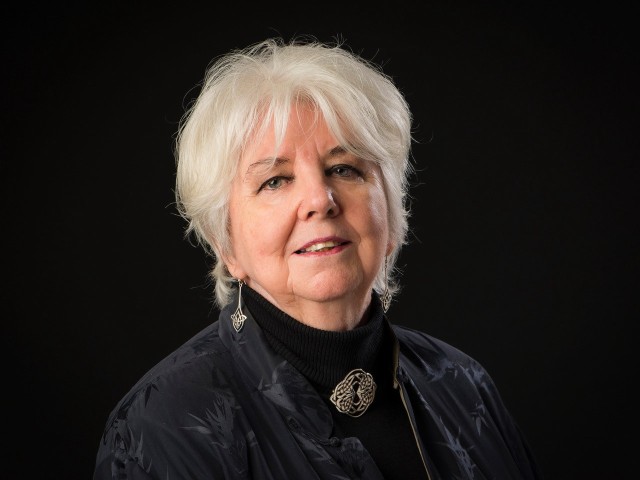
Helen Haste is Professor Emerita in Psychology at the University of Bath, UK, and was a Visiting Professor at Harvard Graduate School of Education 2003-2018. For five decades she has been working on the development of young peoples’ moral, civic and political beliefs, identity and behaviour, including the educational, cultural and social factors which influence these developments. She has also worked on cultural factors in science and society, including how young people regard science and technology and how this influences their choices of study and career. A strand in this work has also been the role of gender and feminist theory. Her current work is on narratives of the future and how we mismanage uncertainty and ambiguity. Her work is based on a theory of culture and the individual that addresses language, rhetoric and metaphor.
She is the author or editor of eight books, over 250 scholarly papers and numerous articles for a general readership. She was co-editor of the journal Political Psychology (2010-2015) and was President of the International Society of Political Psychology in 2002. Haste was chair of the Journal of Moral Education Trust between 2007 and 2014. For many years (1977-2008) she had leadership roles in the British Association for the Advancement of Science including Vice President and Chair of Council. She is the recipient of life career awards from the Association for moral education and the International Society of Political Psychology.
Haste has held visiting appointments in Hong Kong and other Chinese universities: She has also been a visiting professor at the University of Exeter. She is a Fellow of the British Academy of Social Science, the British Psychological Society and the Royal Society of Arts. She has been a frequent contributor to broadcasting and public media.